Boom or Balance?
Across Ballito’s developments, responsibility is taking different forms.
 by
Jacqueline Herbst
· · 4 min read
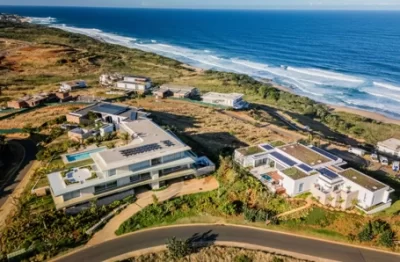
The enormous development boom that has occurred over the last two decades has taken Ballito from a once sleepy seaside holiday village, characterised by sugarcane fields, to one of South Africa’s fastest-growing residential, commercial, and lifestyle hubs has at times been met with concern, especially from long-time residents who lived through the transformation. Traffic congestion, power outages, obstructed sea views, and human-monkey conflict have become a dinner-table lightning rod, drawing heated debates reflecting conflicting views.
To appreciate the state of development in the Ballito area, one must first understand where things come from. Early Zulu clans seasonally burnt vegetation to manage grazing fields for their cattle. Many animals were also hunted. Then, in the early 1800s, sugarcane farmers started planting wall-to-wall sugarcane fields. That was followed by the urbanisation we are seeing now.
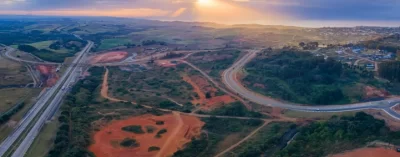
The question is how we manage what comes next. It is easy to look at the cranes, new roads and construction sites across the North Coast and feel that Ballito and its surrounding towns are changing too fast. But the reality is that change here is not new. Go back 50 or 60 years and the places we know today as Ballito, Salt Rock and Sheffield Beach looked very different. They were smaller, quieter coastal communities, with fewer homes and businesses, and considerably less infrastructure. Even a decade ago, the North Coast had a different rhythm and footprint to what residents experience today.
Well-known local ecologist, Simon Bundy, explains that while change is inevitable, the key is how change is managed. “It is much easier to deal with big developments than small piece-meal developers who build one complex or block of flats at a time.” He says large estates add value to road, electricity and water infrastructure beyond what the local municipality is able to do with the budget at their disposal. They also balance things out from an economic perspective, creating jobs and developing the local economy, then following a series of management processes after completion to manage the environment sustainably. This, he says, has seen animal species returning to the spaces that have changed from sugarcane to rehabilitated green spaces within estates.
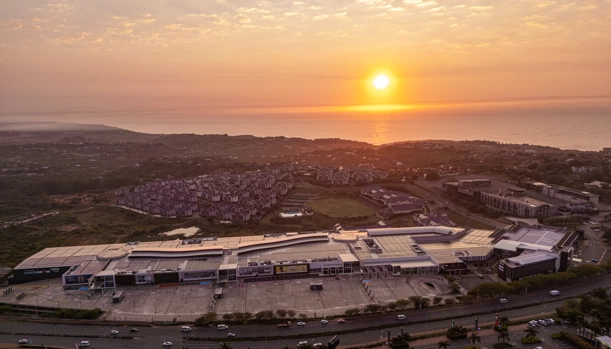
A prime example is the work being done by the Collins Group in the Seaton precinct. This development has already seen hundreds of millions invested in bulk water, sewer and electrical infrastructure, improvements to surrounding road networks, and the new Seaton N2 interchange that forms part of planning for the North Coast and the areas in which it operates. The intention is to create the infrastructure capacity required for growth alongside the development itself, rather than allowing new demand to simply be absorbed by existing, already strained infrastructure.
The mixed-use nature of many of our new suburbs also addresses time spent on the road. By creating schools, workplaces, healthcare, retail and recreation closer to where communities are expanding, the Seaton precinct development reduces the need for commuting back into other established commercial centres for these amenities.
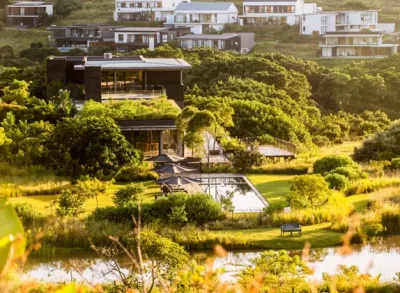
When it comes to prioritising ecology, Simbithi Eco-Estate sets a sterling example of how natural resources can be used to reduce environmental impact across a building’s entire life cycle. While avoiding unnecessary excavations and retaining walls, this development also beautifully accommodated pre-existing indigenous coastal forests, wetlands and wildlife corridors in its design and execution. The estate’s characteristic farm style balances simplicity, sustainability and architectural integrity while, in accordance with its design code, favours the use of eco-friendly materials.
The issue of obstructing views is perhaps best addressed by Zimbali Lakes with golf course homes strategically spread out and designed so as not to impede another’s view. Respecting the environment, the estate’s masterplan was developed around natural waterways, wetlands, drainage lines and indigenous vegetation while previously degraded water features and wetland buffers were restored and are being managed responsibly.
As a whole, Zimbali Lakes creates community connectedness - one of the keystone features of small-town living that some felt has been lost in the boom. Eco trails, restaurants, shops, a sports club, a golf club and an estate clubhouse bring people together through a variety of social and recreational activities.
Ultimately, the question facing the North Coast is probably no longer whether it will grow; the last several decades have already answered that. The more important question is how we collectively massage and mould that growth into a shape that fits the North Coast’s natural character and charm.
Enjoyed this? See more from The Ballito Magazine in your Google results.

Written by
Jacqueline Herbst
Jacqui brings a style of storytelling that informs and engages readers.
READ MORE

Considering Prime Positioning
by The Ballito Writer · November 3, 2026

The Next Chapter in Learning - Reddam House Ballito
by The Ballito Writer · November 3, 2026
Dive In & Discover More
by The Ballito Writer · October 27, 2026