Hunters of the Deep
Inside the world of KZN’s underwater hunters and the waters they call home.
 by
Jacqueline Herbst
· · Updated · 4 min read
by
Jacqueline Herbst
· · Updated · 4 min read

Spearfishing is widely regarded as one of the most immersive ways to experience the ocean. It’s a quiet, breath-held pursuit that reduces the sport to its simplest form: hunter and prey beneath the surface. Along the North Coast, it has become a way of life defined by discipline, respect and a close connection to the sea.
At its core, spearfishing relies on breath-hold diving, or freediving, with no artificial breathing apparatus. Divers typically hold their breath for one to two minutes during a hunt, although longer times are possible in static conditions. Underwater, movement and pressure reduce that window significantly, making calmness essential. Slowing the heart rate, conserving energy and moving stealthily allows divers to stalk their target successfully.
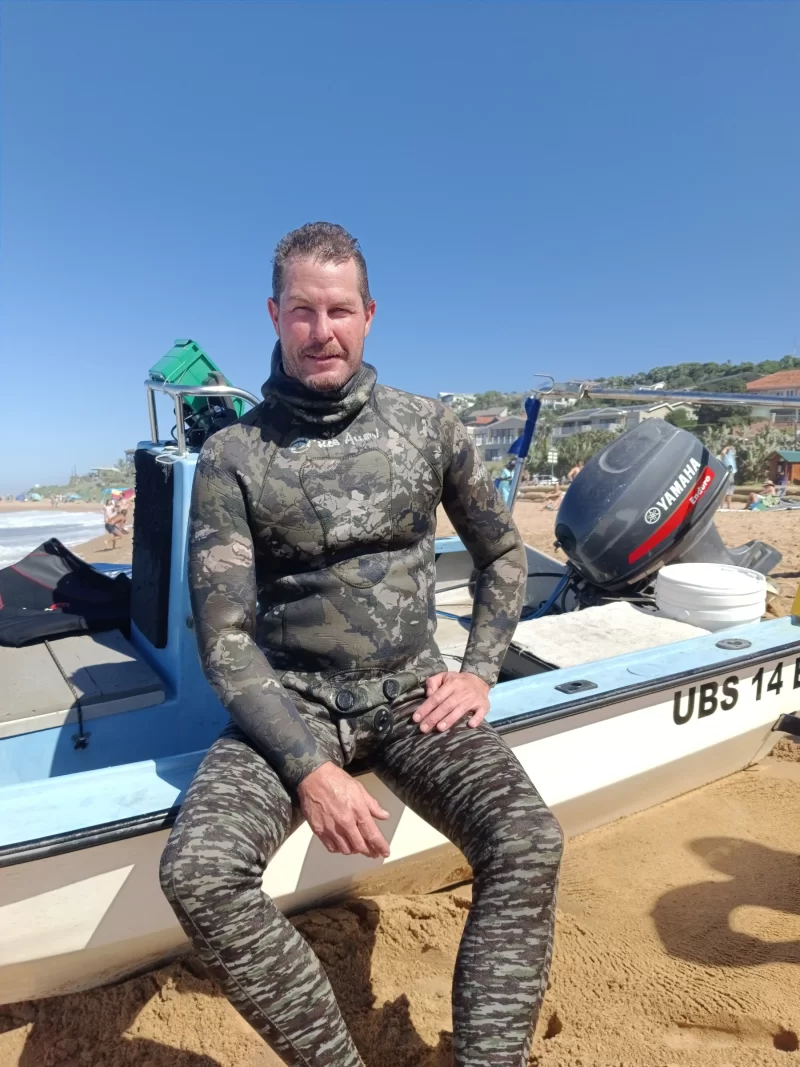
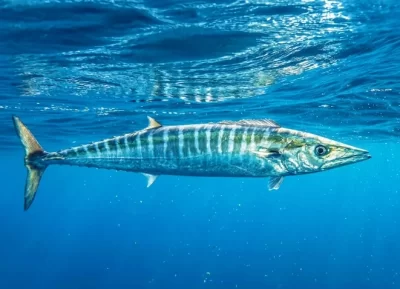
Local spearfisherman, Brod Whittaker, has emphasised the importance of composure, noting that relaxed body language allows divers to approach species such as king mackerel, geelbek, tuna and couta more closely. He describes spearfishing as a unique privilege of coastal living, particularly when it results in a fresh catch.
Conditions play a decisive role. Flat seas, light or no winds and clear water typically characterise the best days. Along the North Coast, visibility is generally most reliable between April and July. Seasonal patterns influence conditions, with south-westerly winds followed by light north-easterlies often improving visibility. Summer rainfall, however, can push silt into the ocean via rivers such as the Tugela, reducing visibility.
Understanding ocean structure is equally important. A common technique involves “working the ledges”, where divers start up-current and drift along reef edges in search of fish. Game fish tend to patrol above reefs or along sandy drop-offs, while reef species stay close to caves, particularly in stronger currents or low visibility. High tide is often preferred for safely crossing reefs and accessing deeper areas.
Despite its appeal, spearfishing carries risks. Encounters with sharks are not uncommon, and losing a catch to these predators is considered part of the sport. More critical, however, is managing personal limits.
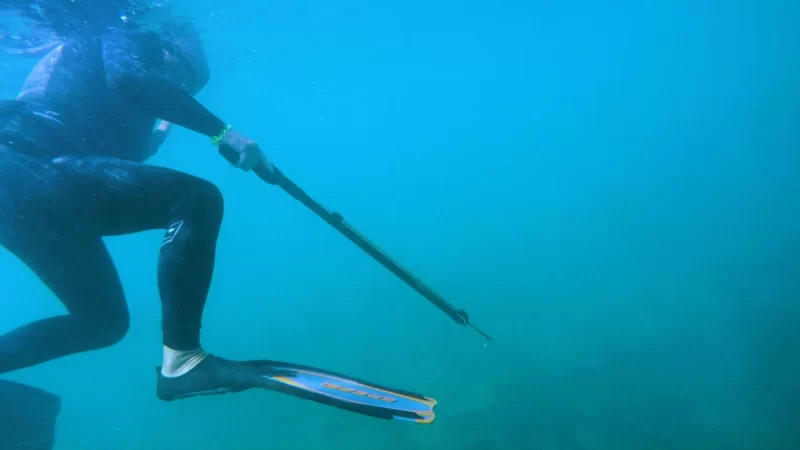
He recalls a dive where he pushed close to the edge of his breath-hold capacity. Although he secured a good shot, the situation escalated when the line became tangled in a muzzle wrap and the reel jammed at a depth of 32 metres. He managed to get himself out of the situation, but the experience highlighted how quickly things can change. He stresses that divers, regardless of experience, must remain within their limits as unexpected complications can arise at any time.
That balance between risk and reward is part of the draw. No two dives are the same, with each offering different conditions, species and challenges. From reefs alive with baitfish to offshore wrecks, the underwater environment is constantly shifting.
Not all encounters centre on the hunt. Brod recalls repeated interactions with a friendly turtle on a local reef, which would often follow him back towards his boat. Experiences like these reflect a broader connection to marine life and contribute to the appeal of the sport.
For beginners, the technical requirements are relatively straightforward. A rail gun between 1.0m and 1.2m is commonly recommended, along with a wetsuit suited to seasonal conditions. Essential safety equipment includes a float with a dive flag for visibility and a knife for emergencies. A low-volume mask, snorkel, long fins and a weight belt complete the basic setup.
Spearfishing is also governed by strict regulations. Recreational divers in South Africa must carry a valid permit and adhere to a daily bag limit of 10 fish per person. Certain species are protected, while others are subject to seasonal restrictions. Spearfishing is prohibited in estuaries, harbours and many marine protected areas, and it is illegal for recreational divers to sell their catch.
Along the North Coast, popular dive sites include Sheffield Reef, Tiffany’s Reef in Salt Rock, and areas around Umdloti and Blythedale, each offering varying reef structures and pelagic species depending on the season.
For many, however, the appeal is found in the discipline of the breath-hold, the stillness of the descent and the close-range encounters with marine life. As Brod notes, it is a pursuit where learning is ongoing and no two days in the water are ever the same.
Written by
Jacqueline Herbst
Jacqui brings a style of storytelling that informs and engages readers.
READ MORE
Not Your Average 9-Year-Old
by Jacqueline Herbst · October 6, 2026

Designed with Care in Mind
by The Ballito Writer · October 2, 2026

Enduro for Everyone
by Jacqueline Herbst · August 21, 2026